Görünmez Motor: Beylikdüzü'nün Yerel Üreticileri Sessizce Nasıl Bir Ekonomi İnşa Ediyor?
The narrative around Istanbul's economy tends to focus on the obvious players: the Grand Bazaar, the tech startups in Levent's glass towers, the luxury retail corridors of Nişantaşı. Beylikdüzü rarely enters that conversation. It's described, when it's described at all, as a residential district — somewhere people sleep after working somewhere else.
That description is incomplete in ways that matter. Spend enough time in the district's back streets, industrial pockets, and neighborhood workshops, and a different picture emerges: a layered, surprisingly resilient local economy built by family businesses, independent craftspeople, and a new generation of entrepreneurs who've deliberately chosen to build here rather than in the city's more glamorous commercial zones.
This is the story of Beylikdüzü's invisible engine.
The Workshop Behind the Apartment Block
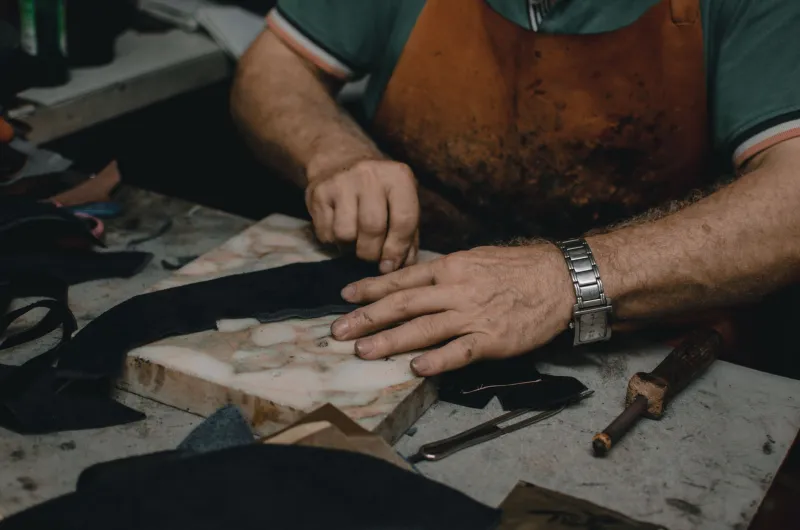
You wouldn't know it from the street, but the ground-floor units of several residential buildings along Beylikdüzü's inner corridors house active workshops. Textile finishing, custom metalwork, small-batch food production, furniture restoration — these operations run quietly, often employing a handful of people from the immediate neighborhood, supplying goods to retailers and distributors across Istanbul and beyond.
This model — small-scale production embedded within residential infrastructure — is common across Turkish urban districts but rarely gets examined as an economic system. In Beylikdüzü, where the residential population has grown substantially over the past two decades, these micro-operations have scaled alongside the neighborhood itself.
Ercan Yıldız has run a small upholstery and furniture repair workshop out of a ground-floor space near the Beylikdüzü Organize Sanayi Bölgesi for eleven years. His clients include hotels in central Istanbul, corporate offices in Ataköy, and private customers who find him through word of mouth. He employs four people, all from within a few kilometers of the workshop.
"Nobody writes about us," he says, without apparent bitterness. "We're not a startup. We don't have an app. But we've been running consistently for over a decade, and we pay our people well. I don't know what more you'd want from a business."
The Organized Industrial Zone Nobody Talks About
Beylikdüzü hosts a formal Organized Industrial Zone — the Beylikdüzü Organize Sanayi Bölgesi — that operates largely below the radar of Istanbul's business press. The zone houses manufacturers across sectors including packaging, plastics, food processing, and light engineering. Combined, the businesses operating within and around it represent a significant slice of Istanbul's outer-ring manufacturing capacity.
For US readers trying to contextualize this: think of it as a mid-sized industrial park operating within commuting distance of a major city, supplying goods that end up in supply chains far beyond the immediate region. The difference is that many of the businesses here are family-owned and multi-generational rather than corporate subsidiaries.
The zone has also attracted a newer cohort of businesses — younger entrepreneurs who've identified the infrastructure advantages of operating in Beylikdüzü (lower overhead, available space, proximity to major logistics routes) while building products and brands aimed at national and international markets.
Modernizing Without Losing the Thread
One of the more interesting dynamics in Beylikdüzü's producer community is the tension — and occasional harmony — between traditional craft knowledge and contemporary business thinking.
Selin Arslan, 29, grew up watching her father run a small textile dyeing operation that supplied fabric to Istanbul's garment district. After completing a business degree, she returned to Beylikdüzü and spent two years restructuring the family business. She introduced natural dye processes, developed a small direct-to-consumer line sold through an online store, and began supplying independent fashion designers who wanted ethically sourced, small-batch materials.
"My father thought I was going to ruin what he'd built," she says with a laugh. "Now he handles production and I handle everything else. The business is three times the size it was five years ago, and we have customers in Germany and the Netherlands."
Her story is not unique. Across Beylikdüzü, a pattern repeats: a first generation builds something durable through craft and local relationships; a second generation arrives with formal education, digital tools, and an instinct for markets that the first generation never had access to. The combination, when it works, produces businesses that are genuinely hard to replicate — rooted in real production knowledge but capable of operating at modern commercial scale.
The Circular Economy Taking Shape
Perhaps the most quietly significant development in Beylikdüzü's producer ecosystem is the emergence of informal circular networks — arrangements where the byproducts of one operation become the inputs for another.
A food producer's excess packaging materials get redirected to a local crafts workshop. A furniture maker's wood offcuts supply a neighborhood school's art program and a small charcoal producer. A textile operation's fabric remnants are collected by a cooperative of women producing accessories sold at the district's weekend markets.
None of this is formally organized. There's no NGO coordinating it, no government program funding it. It's emerged organically from the density of small producers operating in proximity to each other, connected by neighborhood relationships and the practical logic of not wasting usable material.
Dr. Ayşe Kılıç, an urban economist at a Istanbul university who has studied informal production networks in Turkish cities, describes what's happening in districts like Beylikdüzü as "embedded circularity" — economic sustainability that develops not from policy mandates but from the accumulated social capital of communities that have worked alongside each other for years.
"These networks are fragile in some ways," she notes. "They depend on trust and proximity. But they're also resilient in ways that purely transactional supply chains aren't. When one node in the network has a difficult month, the others often absorb the impact informally. It doesn't show up in any economic report, but it's real."
Why This Matters Beyond Beylikdüzü
For anyone watching urban economic trends — and for US readers thinking about what sustainable local economies might actually look like in practice — Beylikdüzü's producer community offers something instructive.
This isn't a curated artisan market or a government-funded maker space. It's a working economic ecosystem that developed because people built things here, stayed here, and gradually built relationships with each other. The circular elements aren't a branding strategy — they're a practical response to the conditions of operating as a small producer in a dense urban environment.
The businesses here won't be disrupting any industries. They're not looking for Series A funding or planning an IPO. But they're employing people, supplying goods, retaining economic value within the community, and building something that compound over time in ways that venture-backed growth stories rarely do.
Beylikdüzü's invisible engine keeps running. It just doesn't make much noise about it.