Çay, Akşam Yemeği ve Her Şey Arasındaki Hayat: Beylikdüzü'nde Gerçek Türk Yaşamı Nasıl Görünüyor?
There's a particular version of Turkey that gets exported to the rest of the world — Ottoman palaces, dervishes, spice markets, maybe a dramatic cliffside in Cappadocia. It's beautiful. It's also about as representative of daily life in Beylikdüzü as a postcard of the Brooklyn Bridge is of a Tuesday morning in Queens.
The reality is more interesting. And for American readers who've grown up with a pretty thin diet of Turkish cultural context — usually limited to döner kebab shops and maybe a few episodes of a travel show — what's actually happening in this neighborhood is worth exploring properly.
Morning Rituals That Would Feel Familiar (and a Few That Wouldn't)
Meet Selin, 34, a physical therapist and mother of two who's lived in Beylikdüzü for eight years. Her mornings start the way a lot of American mornings do — alarm, coffee, kids, chaos. Except the coffee is Turkish, brewed thick in a small copper pot called a cezve, and the chaos is punctuated by her mother-in-law appearing at the door with a container of homemade börek at 7:45 a.m.
"People always ask me if living with or near extended family feels restrictive," Selin told us, laughing. "But honestly? Free childcare and someone who actually knows how to make proper pastry? I'll take it."
This is one of the first things that surprises Americans who spend real time here: the extended family network isn't a relic of a pre-modern past. It's an active, functional, and — by the accounts of most people we spoke to — genuinely desired part of daily life. It's not that people can't live independently. It's that many of them actively choose proximity.
That said, Beylikdüzü is not a monolith. The neighborhood has attracted residents from across Turkey and beyond, and generational attitudes about family structure vary widely. The young couple who moved here from Ankara for work might have a very different setup than the family that's been rooted here for decades.
The Food Scene: Way Beyond Kebab
Let's talk about eating, because it would be a disservice not to.
The food culture in Beylikdüzü reflects something that's true of Istanbul broadly — it's a city that takes feeding people seriously, and the neighborhood level is where that seriousness really shows up. Not in fancy restaurants with tasting menus (though those exist too), but in the places that have been making the same dish the same way for twenty years.
Hamit Usta has run his pide shop — think of it as a Turkish flatbread that's closer to a boat-shaped personal pizza than anything else — for over fifteen years. His lunch rush starts at 11:30 and doesn't really stop until 2. "The neighborhood has changed a lot," he says, sliding a tray of cheese-and-egg pide onto the wooden counter. "New buildings, new people. But they all still come here for lunch."
Beyond the classics, though, the food scene in Beylikdüzü has genuinely evolved. You'll find:
-
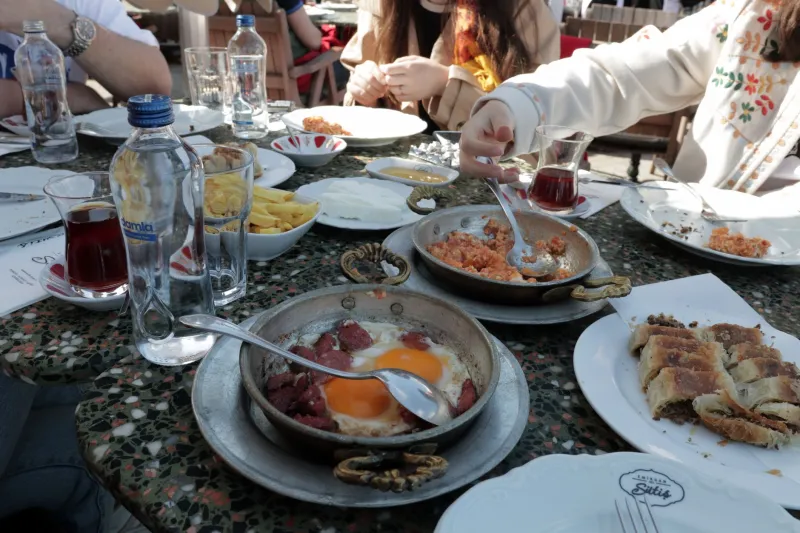
Brunch culture that rivals anything in Brooklyn. Türk kahvaltısı — the traditional Turkish breakfast spread — has been elevated into a weekend social ritual. Tables loaded with cheeses, olives, tomatoes, cucumbers, eggs cooked multiple ways, honey, clotted cream, and more types of bread than you knew existed. It's not fast, and it's not meant to be.
-
International flavors woven into everyday eating. Sushi spots, Korean fried chicken joints, and Mexican-inspired fast casual have all made appearances. They coexist with traditional lokanta restaurants without anyone treating it as a contradiction.
-
A serious café culture. Third-wave coffee has arrived in Beylikdüzü. Specialty roasters, pour-over bars, and avocado toast exist here alongside the tea gardens where old men play backgammon. Both are packed on weekend mornings.
Social Life and the Art of Showing Up
One thing that consistently catches American visitors off guard is the texture of social life here — specifically, how much of it happens in person, spontaneously, and without a calendar invite.
The concept of dropping by someone's home unannounced — or with very short notice — is still alive and practiced in ways that would feel intrusive in most American contexts but land completely differently here. It's a gesture of closeness, not a violation of personal space. The tea is always on. There is always more food than necessary.
Ayşe, a retired schoolteacher in her 60s, put it simply: "In America, I hear people say they're 'too busy' to see their friends for months. Here, if I don't see my neighbor for a week, she checks if I'm sick."
This isn't to romanticize it. Younger residents, particularly those who've studied or worked abroad, sometimes find the social density exhausting. Privacy and personal space are real topics of conversation among Beylikdüzü's millennial and Gen Z residents. The culture is negotiating these tensions in real time, just like everywhere else.
Tradition and Modernity, Living in the Same Apartment Building
Perhaps the most honest way to describe life in Beylikdüzü is this: it's a place where a woman in a headscarf and a woman in workout clothes might be best friends, neighbors, or the same person depending on the day.
Religious observance varies enormously. During Ramazan, the neighborhood takes on a particular warmth — iftar tables set up in public spaces, a general sense of collective rhythm. During the rest of the year, the same cafés that fill up for suhoor are filled with people who aren't fasting at all, and nobody particularly minds.
This coexistence — which might seem surprising or even tense from the outside — is, for most residents, just Tuesday. "We grew up together," says Mert, a 28-year-old graphic designer. "My best friend prays five times a day. I don't. We've been playing FIFA together since we were twelve. It's not complicated."
What This All Means for the American Eye
For US readers, the takeaway from spending time with Beylikdüzü residents isn't that Turkish culture is just like American culture with different food. It isn't. The rhythms are different, the relationship to time is different, the role of community is different.
But the gap is far narrower than the stereotypes suggest. People here are navigating work stress, parenting decisions, generational disagreements, and the question of whether to order delivery or actually cook dinner — in other words, the full, ordinary texture of modern life.
Beylikdüzü'deyiz exists because we believe this neighborhood's story is worth telling in full. Not the postcard version, and not the anxiety-driven "is it safe?" version that dominates too many American conversations about Turkey. The real version — complicated, warm, funny, and deeply alive.
Come for the pide. Stay for everything else.